How nature recycles
In nature, nothing is wasted
Everything that lives becomes food for something else. That is nature’s own way of recycling, and it has worked for millions of years.
Round and round
A leaf grows on a tree and falls in the wind. Earthworms pull it underground, and tiny fungi and bacteria break it into crumbs. Those crumbs become rich soil, full of food for plants. A seed drinks up that food, sprouts, and grows into a new tree, which grows new leaves.
Nothing is thrown away. Everything becomes the beginning of something new.
Nature's helpers
The friends who keep the circle turning
A tailorbird's nest is made of leaves and silk. When it is no longer needed, it returns to the soil.
Squirrels bury nuts to eat later. The ones they forget can grow into new trees.
Earthworms dig tunnels that let air and water into the soil, and turn dead leaves into food for plants.
Fungi break down fallen leaves and wood, and link tree roots underground so trees can share water and food.
Many moths visit flowers at night and carry pollen, helping new seeds to grow.
Bees get sweet nectar; flowers get their pollen carried to make seeds. Both win.
Where the circle breaks
Things nature can't take back
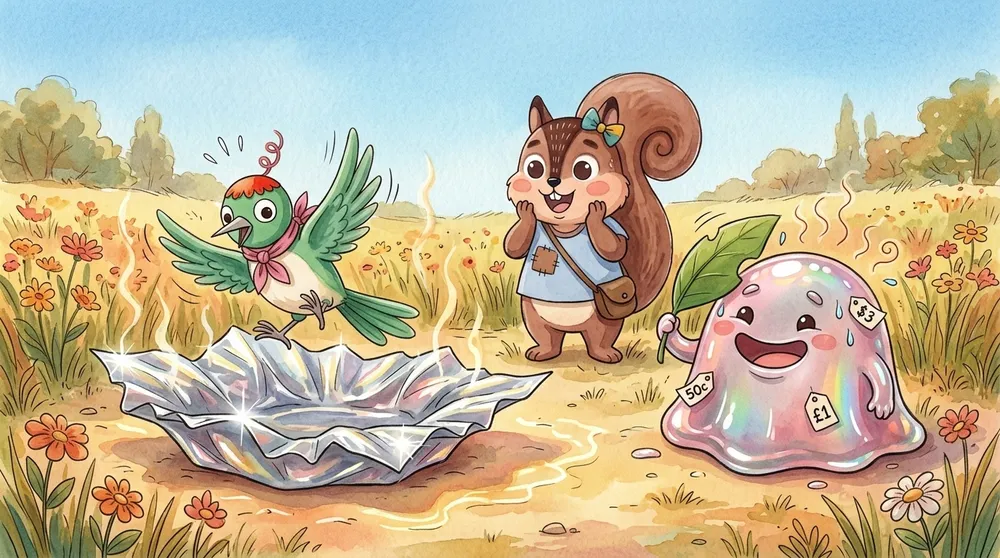
Plastic wrappers, bottles and shiny throwaway things don't turn back into soil. They can last for hundreds of years. That is Gloop's lesson in our stories: nature can't clean up after things it didn't make.
What children can do: mend instead of throwing away, choose things that can be used again, and put litter where it belongs.
Try it at home: a compost jar
- Put a layer of soil in a clear jar.
- Add a few fallen leaves, a little fruit peel and another layer of soil.
- Keep it slightly damp, with the lid loose, and put it somewhere shady.
- Look every few days. Over weeks, watch the leaves slowly turn into soil.
Grown-ups: wash hands after handling soil.